How to pronounce North Yorkshire place names (Rievaulx, Ruswarp, Grosmont)
 A weathered stone fingerpost pointing to Dales villages beneath a wide Yorkshire sky
Four names catch almost every visitor, a dozen Old Norse landscape words explain half the map, and one greeting is not a question at all.
The four that catch everyone
Rievaulx, the ruined Cistercian abbey in Ryedale, is the classic trap. The Norman-French spelling suggests something elaborate; most people say ree-VOH, and older locals in the Helmsley area will say something closer to RIVERS. Either will be understood. Ruswarp, just up the Esk from Whitby, is not Rus-warp but roughly RUZ-up. Grosmont, on the North Yorkshire Moors Railway, is GROW-mont with a long first vowel, not the French version. Knaresborough compresses to NAIRZ-bruh in speech, exactly as Boroughbridge is BURR-uh-bridge. Get those four right and you sound like someone who has been before.
A handful of others reward a moment's thought. Kirkbymoorside is usually said as Kirby-moor-side and is often shortened to Kirby in conversation. Aysgarth is AYZ-garth. Muker in Swaledale is MEW-ker. Malham is MAL-um, with the h swallowed. Easingwold is EEZ-ing-wold. Sleights, near Whitby, rhymes with slights. Nobody will correct you unkindly, and Yorkshire is not a place that polices accents, but pronunciation is the fastest way to stop asking directions twice. Bus drivers in particular will help you far more efficiently if the destination you name is recognisable at speed.
Why the map is half Norse
The Danish and Norwegian settlement of this region left its fingerprints all over the signposts, which is genuinely useful for navigation. A place ending in -by was a Norse farmstead or village: Whitby, Danby, Selby, Thornaby. A -thorpe was a smaller outlying settlement, hence Bishopthorpe and Fridaythorpe. A -thwaite was a clearing, giving Slaithwaite and Huthwaite. Keld means a spring, which is why the village at the head of Swaledale is called exactly that. Sett or seat implies summer pasture, as in the shielings above Wensleydale. Anglo-Saxon -ton and -ham names fill the flatter, older-farmed Vale of York.
That etymology tells you something about terrain before you get there. Names in -gill, -foss and -fell cluster in the steep, wet, high country of the western Dales; names in -ton, -field and -thorpe dominate the arable Vale of Mowbray and the corridor between York and Malton. If your accommodation is in somewhere ending -gill or -side, expect a single-track lane and a gradient. If it ends -thorpe and sits near the A64, expect flat lanes and easy driving. It is a crude rule, but it holds up more often than the marketing photographs do.
Landscape words you will need on a footpath sign
A beck is a stream, and every dale has several. A gill or ghyll is the steep, narrow ravine the beck cuts. A force is a waterfall, which is why the county has Hardraw Force, Thornton Force and the tiered drops at Aysgarth. A scar is an exposed limestone cliff, as at Kilnsey Crag and the great curve of Malham Cove. A tarn is a small upland lake, hence Malham Tarn, while Semer Water is the exception that calls itself a water. Clints and grykes are the blocks and fissures of limestone pavement above the Cove.
On the moors the vocabulary shifts. A rigg is a ridge, which explains Blakey Ridge and a dozen minor riggs on the Ordnance Survey sheets. A howe is a burial mound, and the moor tops are littered with them. Staithe means a landing place, giving the fishing village of Staithes, said Stayths. The Wolds are rolling chalk uplands, distinct from the gritstone moors. And carr means wet, boggy woodland, which is exactly what you will find if you ignore the path. Read the name on the sign and you have a decent weather and footwear forecast.
York's streets speak their own language
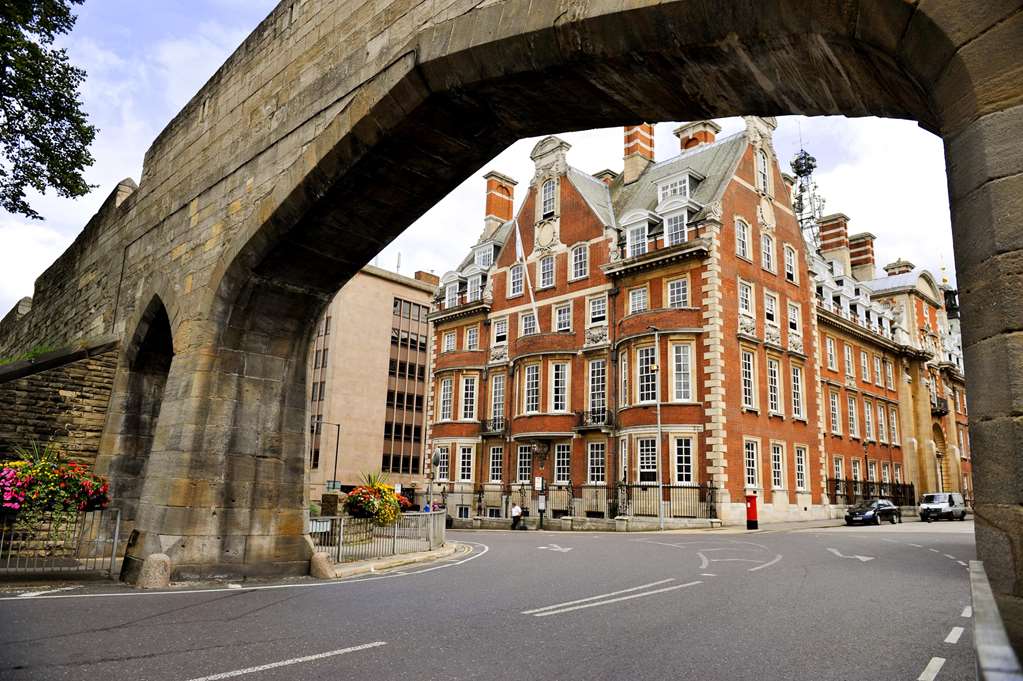
In York, gate means street, from the Old Norse gata, so Stonegate, Micklegate, Goodramgate and Fossgate are simply streets. Confusingly, the medieval gateways in the city walls are called bars: Bootham Bar, Monk Bar, Micklegate Bar, Walmgate Bar. So the rule locals recite is that the gates are streets and the bars are gates. Goodramgate is usually said GOO-drum-gate. The Shambles, the overhanging butchers' row, is always plural and never The Shamble. Whip-Ma-Whop-Ma-Gate, the shortest street with the longest name, is a genuine address and not a tourist joke.
Snickelway is the other word you will meet, a coinage from a 1983 local book combining snicket, ginnel and alleyway to describe York's tangle of narrow passages. It is a modern word for an ancient thing and locals use it happily. Elsewhere in the county, a narrow passage between buildings is a snicket in the east and a ginnel in the west, and you can start an argument in a Skipton pub about where the boundary falls. If someone tells you to cut through the ginnel by the chippy, they mean the alley, and it will be quicker than the street.
The dialect you will genuinely hear
Ey up is a greeting, not an alarm. Now then, delivered flat, is also a greeting and not a question, so answering it with an explanation of your plans marks you instantly as a visitor; the correct reply is now then back. Nowt is nothing, owt is anything, ta is thank you and is used constantly. Mardy means sulky, mithering means pestering, and being chuffed is being pleased. Love and, less often, duck are used across genders and ages by shopkeepers and bus drivers as neutral politeness, not familiarity. None of it is performance; it is simply how people speak here.
Two things confuse visitors more than vocabulary. The first is definite article reduction, where the is compressed to a glottal catch, so going to the shop becomes something close to goin t’shop. The second is mealtimes: dinner is often the midday meal and tea is the evening one, which matters when a landlord says food finishes at tea time. Supper, where it appears, is late and light. If you are invited for tea at six, you are being fed a full meal, not offered a hot drink, and turning up having already eaten is the small social error people politely never mention.
Pub and food vocabulary
You order at the bar and pay as you go; table service for drinks is not standard outside hotel restaurants and smarter dining rooms. A pint of bitter means cask ale, and in this county that often means the Masham breweries whose beers are on pumps from Richmond to Ripon. Theakston Old Peculier is spelled with that final -ier, after the Peculier of Masham, an ecclesiastical court, and locals will notice if you correct the spelling. If you dislike warm-tasting ale, ask for something pale and cold-conditioned; nobody is offended, and every bar keeps a lager tap.
At a chippy, scraps are the loose bits of fried batter and are usually free for the asking; on the coast, ask for them with your haddock rather than cod, which is what Whitby and Scarborough boats have landed for generations. Yorkshire pudding is traditionally served first, alone, with onion gravy, and only later got demoted to a side dish. A curd tart is a cheese-curd and currant pastry, parkin is oatmeal and treacle gingerbread eaten around bonfire night, and a fat rascal is a large fruited scone associated with the Harrogate tearoom that trademarked the name.
Etiquette that has nothing to do with words
Yorkshire pride is real and mostly good-natured, but a few reflexes are worth learning. People here call themselves Yorkshire before they call themselves northern, and the county line matters: Whitby, Richmond and Settle are North Yorkshire, while Leeds, Bradford and Sheffield are emphatically not. Calling the North York Moors the Dales, or vice versa, is the geographical error most likely to earn a correction, since they are two separate national parks with different rock, farming and character. Yorkshire Day falls on 1 August and is celebrated with more sincerity than outsiders expect.
In small villages, acknowledge people. Walkers say hello on paths, drivers lift a hand in passing places, and silence reads as rudeness rather than reserve. In pubs, do not stand between a regular and their usual stool at the bar, and do not take a reserved table because the ticket looks old. Complaining loudly about the weather is standard conversational currency and requires no solution. And if someone tells you a place is grand, that is high praise; the local register runs quiet, and enthusiasm is expressed by understatement rather than volume.
Before you book
The questions people ask about York, answered with this month’s numbers.
Broad rural Yorkshire, especially among older speakers in the upper dales, can be genuinely fast and vowel-shifted. In York, Harrogate and the coastal resorts you will hear a much milder version. Asking someone to repeat something is entirely normal here and is never treated as an imposition; people slow down willingly.
Both mean a narrow passage between buildings. Snicket dominates in the eastern and northern parts of the county, ginnel in the west towards Skipton and the West Yorkshire border. In York, the local coinage snickelway covers both. All three describe the same shortcut, and all three will be understood anywhere in the county.
If a pub offers it that way, yes, take it. The traditional order is a large pudding with onion gravy before the roast, a habit rooted in filling people up cheaply. Several old-school inns in Wensleydale and Ryedale still serve it that way on Sundays, and it is genuinely better than the side-dish version.