Selby area guide: cheap beds, a Norman abbey and 15-minute trains to York
 The west front of Selby Abbey seen across the market square
The cheapest overnight in North Yorkshire outside the roadside chains, with doubles from about £55-85 and a station that puts you in central York in a quarter of an hour.
The single reason to book Selby
Selby is a flat market town on the tidal Ouse fourteen miles south of York, and the argument for staying here is arithmetic. A double with breakfast typically runs £55-85, against £110-180 in central York on the same night, and the train takes about fifteen minutes. Over four nights for two people, that gap funds most of a holiday's meals. If York is your destination and the budget is tight, this is the most efficient trade in the county — better value than Malton, closer than Doncaster, and with a genuinely good abbey to come home to.
It also works as a base for the low country south and east of York: the TransPennine Trail runs through on its way to Hull, the flat lanes around Barlby and Riccall are as easy as cycling gets in Yorkshire, and Skipwith Common's lowland heath is six miles north. This is a landscape of drainage dykes, big skies and power station cooling towers on the horizon, and if you can see that as character rather than absence, Selby delivers.
Who should absolutely not book here
Anyone whose trip is about the Dales, the Moors or the coast. Skipton is an hour and a quarter, Helmsley an hour, Whitby nearly two, Grassington an hour and a half. You would be driving out of the flatlands every morning and back every night. If your itinerary has more than one day in the National Parks, pay the extra and base yourself north or west.
It is also wrong if you want atmosphere in the evening. Selby's high street has the usual mix of chains, charity shops and takeaways, and outside the abbey precinct the town is not scenic. There are decent pubs and a handful of independent places to eat, but the restaurant range does not compare to York, Harrogate or even Malton. And do not book Selby expecting a picturesque riverside — the Ouse here is tidal, brown, industrial in places and lined with flood defences rather than promenades.
What a night costs, tier by tier
At the bottom, the budget chain hotels on the edges of town near the A63 and A19 run about £45-70 for a room, sometimes less midweek in winter. They are unremarkable, they have free parking, and they are a mile or so from the abbey, which means a fifteen to twenty minute walk into town along roads with pavements. Perfectly serviceable if the room is only for sleeping.
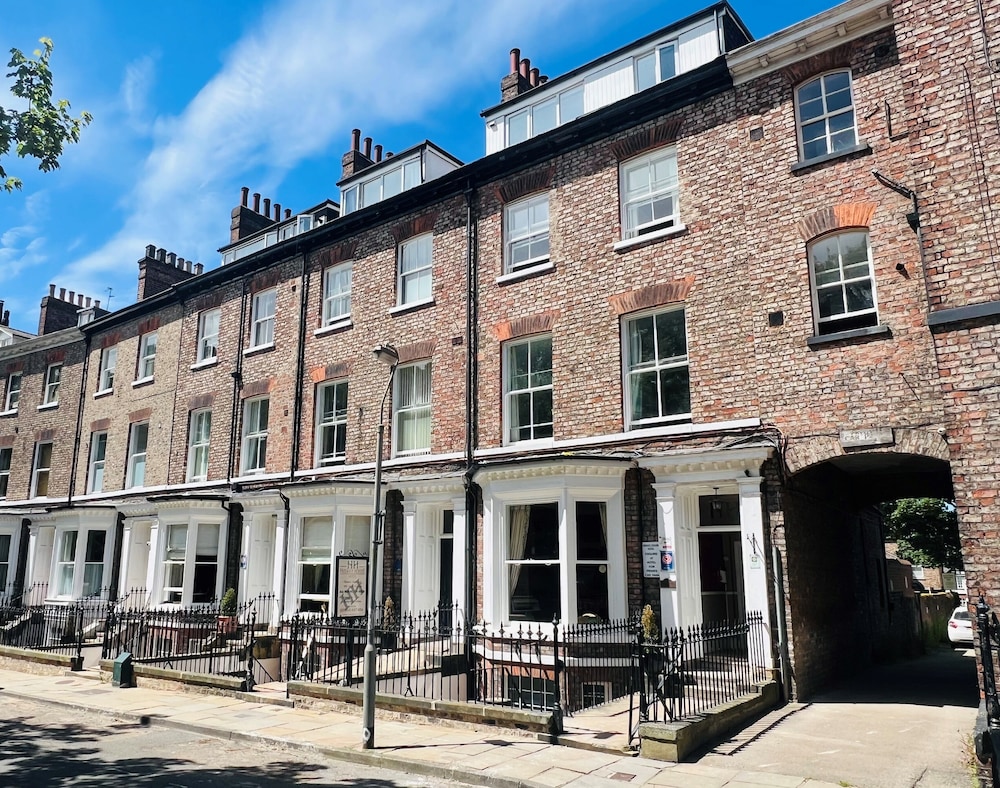
In the middle, guesthouses and pub rooms around Gowthorpe, Leeds Road and the streets near the station sit at £60-90 with breakfast, and this is the tier to book: you can walk to the abbey, the station and dinner. At the top, converted farmhouses and small country places in the villages towards Cawood, Riccall and Camblesforth run £95-130 and give you gardens, quiet and a car dependency. Across all three tiers, Selby is the cheapest of the site's twenty-five North Yorkshire areas, undercutting Bedale by roughly £15 and York by £60 or more.
Walking distance from the market place
Selby Abbey dominates and deserves an hour. Founded in 1069 as one of the first Benedictine houses in the north after the Conquest, it kept its full church when the monastery was dissolved because the town took it over as a parish church, which is why you get a Norman nave, an Early English choir and a great east window rather than a ruin. Look for the 15th-century Washington window carrying the arms of the family from which the first American president descended — three stars above two stripes, and the reason coach parties stop here.
The rest of the centre is compact: the market place is outside the abbey door, the twice-weekly market fills it, and the station is a seven-minute walk. The swing bridge over the Ouse and the lock where the Selby Canal joins the river are ten minutes away, and Selby Park with its bandstand and bowling greens is a similar distance. That is the honest extent of walkable sightseeing — a good half day, not two days. Market days can shift; check locally.
The station, and how far it really gets you
Selby's station is the asset. Services run west to Leeds in roughly 25 minutes, north to York in about 15, east to Hull in around 45 and south towards Doncaster in about 20, and some long-distance services on the East Coast route call here for London in a little over two hours. That gives you York, Leeds, Hull and Doncaster as day trips without touching a car, which no other cheap base in the county matches. Stopping patterns and journey times change with each timetable revision, so confirm your specific connections with the operator.
Practically, that means you can do the Minster and the Shambles on Monday, the Royal Armouries and Kirkgate Market in Leeds on Tuesday, and the Deep and the Old Town in Hull on Wednesday, sleeping in a £70 room throughout. If that itinerary appeals more than fell walking does, Selby is not a compromise base at all — it is the correct one. Buy tickets in advance where you can; walk-up fares on these routes are considerably higher.
Days out by car from Selby
Carlton Towers, five miles south, is a Victorian Gothic remodelling of a Jacobean house, opened to visitors on limited days — check dates before setting out. Cawood, five miles north on the Ouse, has the surviving gatehouse of the archbishops' castle where Cardinal Wolsey was arrested in 1530, and a good riverside pub. Skipwith Common, six miles north, is one of the last surviving lowland heaths in the north of England, with adders, nightjars in early summer and boardwalked paths.
Further out, Pontefract and its castle ruins are twenty minutes, Howden's minster twelve miles east, and the Humber Bridge under an hour. What to skip: driving into York. The park-and-ride sites work but you will have paid for parking and fuel to arrive later than the train would have delivered you. Use the station for York every time, and save the car for the flat country where public transport genuinely thins out.
Timing, flooding and the practical warnings
Selby's prices barely move with the seasons, which is part of the appeal — a July Saturday might add £10-15 rather than double. The real pressure comes from events in York and Leeds: race meetings at York Racecourse, big concerts and festival weekends push demand outward and Selby is one of the first overflow towns to fill. If your dates coincide with a York race fixture, book six to eight weeks out or expect to pay near-York prices for a Selby room.
The other thing to know is water. This is low-lying land at the confluence of the Ouse and its drainage systems, and the town has flooded historically; defences have been substantially improved but prolonged winter rain still affects riverside paths and some rural lanes. Check conditions if you are visiting between December and February and planning to walk or cycle the Ouse bank. Otherwise, the best months here are May and September, when the flat lanes are ideal for cycling and daytime highs sit around 16-20C.
Before you book
The questions people ask about York, answered with this month’s numbers.
Roughly 15 minutes on direct services, with several trains an hour at most times of day. That makes Selby the cheapest realistic base for a York holiday, saving £50-90 a night on accommodation. Confirm the timetable for your dates with the operator, as stopping patterns vary and Sunday services are less frequent.
About half a day. The abbey merits an hour or more, the market place and the riverside lock take another hour, and Selby Park fills the rest. Beyond that you are looking at Cawood, Skipwith Common or a train to York. Treat Selby as a base rather than a destination.
The abbey precinct, the market place and the station route are well used and lit, and the walk from town to the station takes about seven minutes. If you book one of the budget hotels on the town edge, factor in a fifteen to twenty minute walk back along main roads, or budget roughly £6-9 for a local taxi.