York Minster
The largest medieval gothic cathedral in northern Europe, holding more medieval stained glass than the rest of England put together — including the Great East Window, the size of a tennis court.
 West front towers of York Minster rising above the medieval streets of York
What to expect at York Minster
York Minster — properly the Cathedral and Metropolitical Church of St Peter — is the seat of the Archbishop of York and the largest gothic cathedral in northern Europe. The present building was begun around 1220 and consecrated in 1472, meaning 250 years of construction that ran from Early English through Decorated to Perpendicular, all of it visible if you know where to look: the transepts are earliest, the nave and chapter house next, the choir and towers last. Beneath it lie the remains of the Roman fortress basilica of Eboracum, where Constantine was proclaimed emperor in 306, and the Norman cathedral of Archbishop Thomas. It holds roughly half of all the surviving medieval stained glass in England, including the Great East Window, glazed by John Thornton between 1405 and 1408 and the largest single expanse of medieval glass anywhere in the world.
A visit divides into four parts. The nave, vast and pale, with the Dragon's Head beam and the West Window's heart-shaped tracery. The north transept, where the Five Sisters Window — five lancets of thirteenth-century grisaille glass, each 16 metres tall — is the quietest great thing in the building. The chapter house, an octagon roofed without a central pillar, its stalls carved with grotesque heads that reward five slow minutes. And the Undercroft, a modern museum built into the excavations, showing the Roman basilica walls, the Norman foundations, the Horn of Ulf and the story of the 1984 fire and the 1960s engineering rescue of the central tower. Above all of it, 275 steps climb the Central Tower to a roof-level view over the whole city and the Vale of York.
Two hours does the interior properly; three if you add the tower and read things. Tickets are valid for twelve months from purchase, which is the single most useful fact about visiting — one payment covers repeat visits all year, so a first look on arrival in York and a return for Evensong later in the week costs nothing more. Book the tower climb as a timed slot, either online or at the desk; it closes in high wind and in wet conditions. Free guided tours led by volunteers run through the day and are excellent — check the board inside the west end. Skip nothing, but do not try to combine the Minster with the tower and a cathedral cafe lunch in a 90-minute gap; that is how people end up rushed.
The Minster stands at the top of the old city and everything walks. From York railway station it is 10-12 minutes on foot across Lendal Bridge, up Museum Street and past Duncombe Place; from the Shambles about five minutes; from Clifford's Tower around twelve. City buses run along Museum Street and Deangate, and the park-and-ride services from Rawcliffe Bar, Askham Bar, Monks Cross and Grimston Bar drop in the centre for around £3.50 return with all-day parking included, which is by far the cheapest way to arrive by car. There is no parking at the Minster itself; Marygate, Monk Bar and Lord Mayor's Walk are the closest, at roughly £3-4 an hour. The city walls path from Bootham Bar gives the best first view of the west front.
Adult admission has been running at about £16, with concessions a couple of pounds less, York residents admitted on a local scheme, and children under 16 admitted at no charge when accompanied by a paying adult. The ticket includes the Undercroft museum, the guided tours and twelve months of return visits. The Central Tower climb is an extra of around £8-10 on top and must be booked as a slot; it is not sold separately from admission. There is no charge to attend a service — Evensong is sung most weekday evenings at 17:30 and on Sundays at 16:00 — but you attend as a worshipper, sit where you are directed, and do not wander with a camera. The Minster shop and the refectory-style cafe are the only other spends.
Mornings are best: 9:30 to 11:00 on a weekday is calm, the east end light is strongest in the morning, and the tower queue is shortest. From about 11:30 the coach parties and school groups arrive and the nave gets loud. Sunday sightseeing hours are short — roughly 12:45 to 15:00 — so a Sunday visitor should plan around worship instead. December is beautiful and packed, with carol services ticketed and selling out; January and February are the quietest months in the whole year and the cathedral is at its most atmospheric, if cold. The tower closes in high winds year-round. Major services, ordinations and civic events close parts of the building at short notice, which is announced on the day.
It suits everybody, honestly, but with caveats. Wheelchair users get very good access at ground level throughout the nave, transepts, choir and chapter house, and there is a lift to the Undercroft; the tower is 275 spiral steps and is not accessible in any form. Families do well with the children's trail and the stone masons' yard; teenagers usually engage more with the tower and the Undercroft than the glass. On a rainy afternoon it is the best indoor two hours in York. With a one-hour gap before a train, buy the ticket anyway — it is valid a year. Nearby: the Shambles and the market are five minutes south, the Yorkshire Museum and Museum Gardens eight minutes west, and the city walls circuit starts at Bootham Bar next door.
Honest caveats. The Great East Window is genuinely enormous but sits high and far back, and without binoculars or the interpretive screens you will see coloured shapes rather than the Apocalypse cycle it depicts — the £11m conservation project restored it magnificently, but the viewing distance is what it is. Ticket prices surprise visitors who assume English cathedrals are open at no charge; they are not, here. The tower climb is narrow, spiral, one-way in places, and unsuitable for anyone claustrophobic or unsteady, and the wait at the base can run 20 minutes even with a slot. Scaffolding is almost permanently somewhere on the exterior. And the Undercroft, though very good, is often skipped by visitors who have already paid for it and do not realise it is included.
Questions about York Minster
Adult sightseeing admission runs about £16, with concessions a couple of pounds lower and accompanied children under 16 admitted at no charge. The ticket covers the nave, transepts, choir, chapter house, the Undercroft museum and volunteer-led tours, and it is valid for twelve months of unlimited return visits. The Central Tower climb costs a further £8-10 on top and must be booked as a timed slot. York residents can register for a local admission scheme at the desk.
Yes, if you come to worship. Attending a service costs nothing — Evensong is sung most weekday evenings at 17:30 and Sundays at 16:00, and Sunday morning services run through the morning. You enter as a member of the congregation, sit where stewards direct, and sightseeing, photography and wandering are not part of it. It is a genuine and beautiful way to experience the building, particularly the choir, but it is not a substitute for a daytime visit to the glass and the Undercroft.
Two hours covers the interior properly: 40 minutes in the nave and transepts, 20 in the chapter house, 30 in the Undercroft and time in the choir. Add 45 minutes if you climb the Central Tower, including the wait at the base. Three hours is comfortable with the cafe. Because the ticket lasts twelve months, many visitors split it — an hour on arrival day and a return for a service or the tower later in the trip.
It is never fully closed, but sightseeing hours are limited: Monday to Saturday roughly 9:30-16:30 with last entry at 16:00, and Sunday only from about 12:45 to 15:00 because of worship. Major services, ordinations, funerals and civic events can close the choir or the whole nave at short notice, usually announced on the day and on the website. The Central Tower closes in high winds and icy conditions at any time of year, with no advance warning.
General admission can be bought at the door and rarely sells out, though buying online saves queueing at the west end desk in July and August. The tower climb is different — it runs on timed slots with limited numbers and does sell out on summer days, so book it when you book admission or as early in the day as possible. Carol services and special concerts in December are ticketed separately and go weeks ahead.
York railway station is a 10-12 minute walk via Lendal Bridge, Museum Street and Duncombe Place, with direct trains from London in under two hours and from Leeds in 25 minutes. City buses stop on Museum Street and Deangate, both under three minutes away. Drivers should use the park-and-ride sites at Rawcliffe Bar, Askham Bar, Monks Cross or Grimston Bar for around £3.50 return including parking; Marygate and Monk Bar car parks are the nearest central options.
Hotels near York Minster
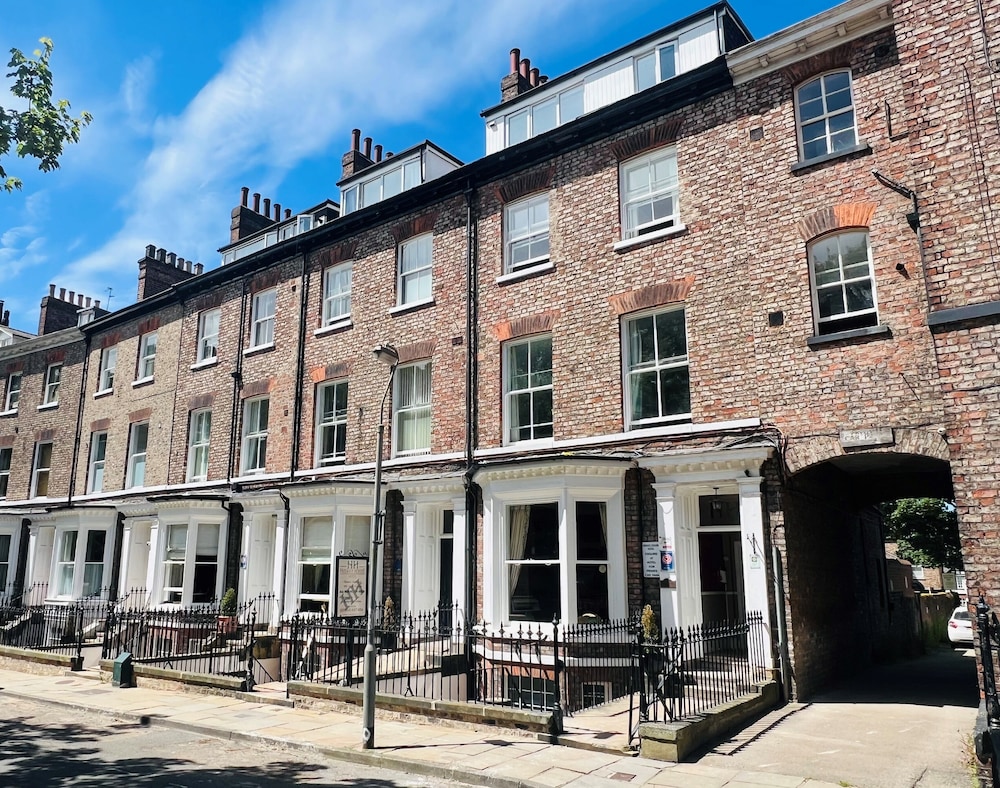
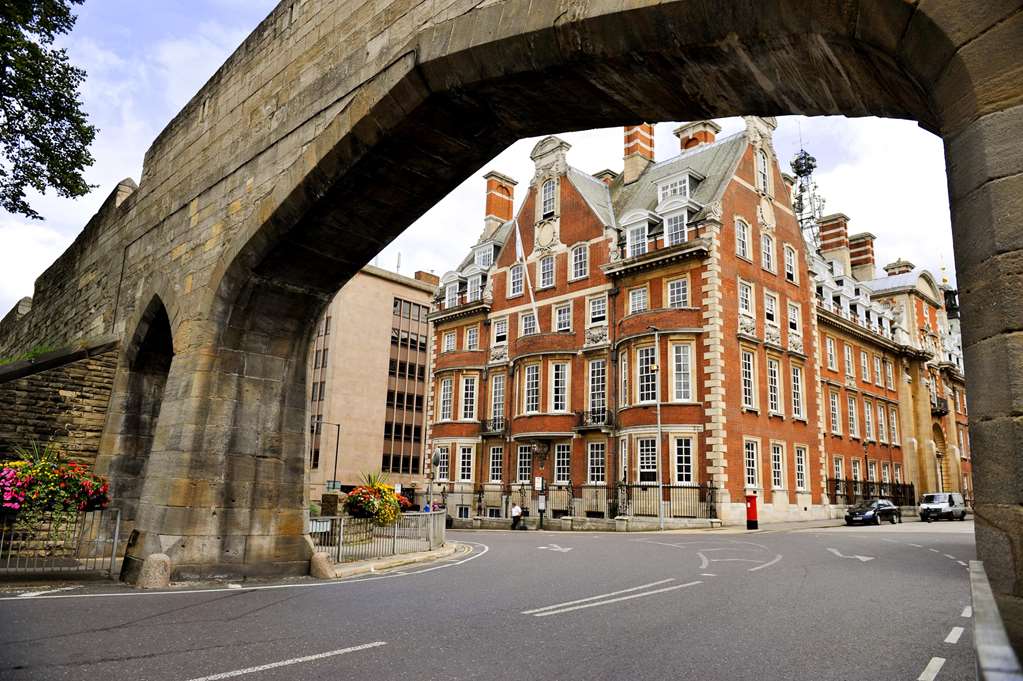
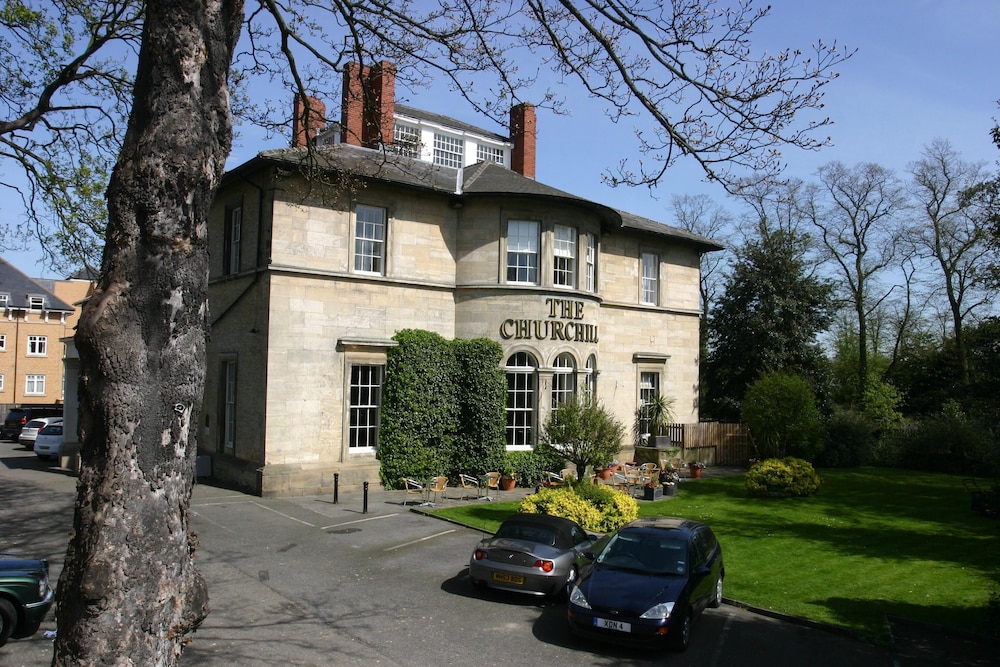
Every hotel we cover in York
- Signal Cottage at the Red House Estate 4★ · 8.7 km away
- Garden House at The Red House Estate 4★ · 8.8 km away
- Piper Cottage Bilbrough York 4★ · 9.3 km away
- The Carriage House Bilbrough York Sleeps 24 4★ · 9.3 km away
- Premier Inn York South West 2★ · 4/5 · 9.3 km away
- The Landings Cottage 5★ · 9.3 km away
- The Churchill Hotel 4★ · 4.5/5 · 6001 km away
- Malmaison York 4★ · 4.4/5 · 6001 km away
- Hampton by Hilton York Piccadilly 3★ · 4.4/5 · 6001 km away
- Moxy York 3★ · 4.4/5 · 6001 km away
- The Milner York 4★ · 4.3/5 · 6001 km away
- The Queens Hotel & Victoria Cloisters 2★ · 4.3/5 · 6001 km away
- Mercure York Fairfield Manor Hotel 4★ · 4.2/5 · 6001 km away
- Novotel York Centre 4★ · 4.2/5 · 6001 km away
- The Lighthorseman 3★ · 4.2/5 · 6001 km away
- Elmbank York Tapestry Collection by Hilton 4★ · 4.1/5 · 6001 km away
- ibis Styles York Centre 3★ · 4.1/5 · 6001 km away
- Premier Inn York North 3★ · 4.1/5 · 6001 km away
- Ascot House 4★ · 6001 km away
- The Apple House 3★ · 6001 km away
More things to do
All things to do


From the journal
All posts Comparisons & rankings
Hotels with hot tubs in North Yorkshire
Comparisons & rankings
Hotels with hot tubs in North Yorkshire
Nine types of hot-tub stay across the Dales, Moors and coast, with honest price bands from £110 a night for a pub room to £340 for a suite with a private tub.
 Comparisons & rankings
Best dog-friendly hotels in North Yorkshire
Comparisons & rankings
Best dog-friendly hotels in North Yorkshire
Eight kinds of dog-welcoming stay across the county, with typical dog charges of £10-25 a night and the walks, beaches and pub rules that decide where you actually book.
 Comparisons & rankings
Best Dog-Friendly Hotels in North Yorkshire 2026
Comparisons & rankings
Best Dog-Friendly Hotels in North Yorkshire 2026
From coastal retreats in Whitby to moorland boltholes near Helmsley, North Yorkshire's dog-friendly hotels welcome your four-legged companion with open arms—and often a bowl of treats at reception.